Upon my arrival in Lima, I immediately took a taxi to the bus station in order to continue my journey to Ica, because I wanted to avoid the impacts of such a huge city. Being extremely exhausted from the 24 hours journey from Düsseldorf to Lima, including a six hour stopover in Miami, I found myself sitting in an uncomfortable bus. Next to me, a business men was talking almost continuously for 5 hours on the phone, in Spanish! I tried to get some rest. However, it seemed that as soon as I have fallen asleep, the bus stopped, my eyes opening, taking a look out of the window, hearing my neighbour's conversation, and falling asleep again. Perceiving this rather strange state of mind for ages, I suddenly found myself again at a crowded bus station, surrounded by Spanish speaking Peruvian people. Obviously, their outward appearance is not similar to any of the Europeans' one, and particularly not to the Spanish people. Looking around and trying to realize what was going on, I found it very awkward to hear the Spanish language all over. According to my life experience, this language is only to be found in Spain. Well, the beginning of my first journey to South America proofed me otherwise!
After two days rest in Ica, I got curious to see Cusco, my home for the coming 27 weeks. Despite my plans to visit Nasca and some other cities, I purchased a direct bus ticket to Cusco; 17 hours of journey in addition. I was wondering about my future place of stay, the working environment and the people I was going to interact with. On Sunday at 12 o'clock the CruzDelSur company bus reached its final destination, Cusco. My first impression of this place could be described with words such as amazing, magnificent and outstanding. The city is surrounded by dark green mountains, that are covered with trees. The deep blue sky is decorated by clouds ranging in colours from snow white until dark grey. What a diversity in colours! Despite the beauty I had great difficulties to keep my eyes open because of the extreme brightness of the sun, and the intense ultraviolet radiation; I might as well had arrived in heaven. While waiting for my company supervisor, Violeta, to pick me up I tried to sense the atmosphere. Some passing people curiously looked into my eyes, whereas others did not pay any attention at all. Cars were rushing by and a symphony of horns could be heard. Suddenly out of nowhere, I heard my name: “Arthur. Is it you?”. Violeta kindly greeted me and we took off to her house, which is located in Jeranimo, twenty minutes away by car from the centre of Cusco. Although being a little nervous, I felt very comfortable around her. Once arrived at the house, I got to meet Tony, the husband of Violeta. Being terribly tired from the bus drive I managed to speak only a few words in Spanish. Apparently, talking English was not any easier. Due to the high altitude of 3400 meters, I had not enough air to properly finish a normal sentence. Nevertheless, I was treated with great hospitality. Shorty after my arrival, the three of us ate a delicious meal. The next thing I could manage that day was going straight to bed.
The next morning I awoke from a long sleep. The only person at home was Ingrid, the second daughter of Violeta. She is studying law at Andina university. That day she did not have classes in the morning and accompanied me for breakfast, bred with marmalade and tee. Ingrid is able to speak English and therefore I could talk to her. She is very friendly and patient and I quickly started to enjoy her company. Afterwards she showed me around the house and I slowly got used to the new place. Around noon, the rest of the family gathered for lunch. Tony, who is teaching Geology at the state university of Cusco, speaks about as much English as I do Spanish. The youngest daughter, Adriana, is about to finish high school. Although she is on vacation, she is barely at home. In the morning she visits an academy to improve her English and in the afternoon she takes classes to prepare for university. The family employs a housekeeper, called Ines. She is a fabulous cook. Sitting at the table I tried to follow the conversation. Without the others talking in English to me, I would have been very lost because the first few days I hardly understood anything. Roberto, the cousin of Ingrid and Adriana joined for lunch, too. I was overwhelmed by meeting so many new people, who all asked questions in Spanish. Later that day another cousin, named Christian, arrived. Everyone behaved in a very polite manner, and treated me with a lot of respect. When I was introduced to Christian's mother, Violeta said that I was part of the family and had now two more sisters, and two more cousins. I extremely appreciated the openness of my new family, that I had just got to know. Obviously, I was in the centre of attention and enjoyed the interest of so many new family members. It was a pity, that my Spanish was so poor because I had the desire to tell everything about myself. Fortunately, communication happens with more than just words. Later that afternoon Adriana, Christian, Roberto and me took a bus to the city centre. I was a tourists, who got a private sightseeing tour to experience Cusco's beauty! What an extraordinary adventure! Not only is the city's location remarkable, it is incredible in itself. Narrow streets encircled by many colourful art and cloth shops, restaurants and cafés. Ancient building such as the Sun Temple, the famous Inca wall and various cathedrals contribute to a cultural richness that is beyond words.
Hours passed by and the sun disappeared. At once the temperature dropped and it was time to go home, where the dinner was already waiting...
ccs assignment for NHTV
Dienstag, 31. März 2009

Dienstag, 17. März 2009
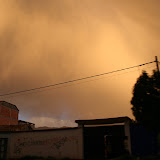
Rayampata - Kartoffelernte
Montag Morgen fuhr ich mit Abuelaita, Ingrid und Ines zur Chakra. Es war Erntezeit! Die Aussicht ist einfach überwältigend. Die frische Luft hatte einen großen Hunger zur Folge, und das Mittagessen war einfach köstlich: frische Kartoffeln, Möhren, Bohnen, Reis, Käse und Fisch; sooo lecker! Das war mein zweiter Besuch zur Chakra und mir wurde direkt bewusst, dass es dort viel schöner ist als in der Stadt Cusco. Ich habe eine Wanderung unternommen, um die vielen Fotos machen zu machen. Trotz der Faszination, gerät man ins Grübeln. Verglichen mit dem Rest der Bevölkerung, leben die Kinder und Eltern in Armut. Für einen ganzen Tag Arbeit der Kartoffelernte, bekommt ein Arbeiter 10 Soles (2.50 EURO) plus Mittagessen. Man kann jedoch auch nicht sagen, dass die Leute am Hungern sind. Körperlich sind sie viel fitter als der größte Teil in Europa. Denn selbst die älteren Frauen und Männer arbeiteten den ganzen Tag und schleppten die Kartoffeln. Die Sonne brannte diesen Tag sehr, und die Farben waren einfach unbeschreiblich. Trotz der guten Kamera, kann man nur einen geringen Eindruck bekommen, wie es hier aussieht...
 |
| Rayampata - Kartoffelernte |
Sonntagsausflug nach Tipon
Am Sonntag Nachmittag war er Zeit für einen Familienausflug. Spontan wurde entschieden, nach Tipon zu fahren. Eine 30 minütige Fahrt in dem Peugeot 403, Jahrgang 66 (siehe Foto) war ein Abenteuer für sich. Ich hätte nie gedacht, dass so ein altes Auto einen Berg hochfahren kann!
Oben angekommen, ging die Besichtigung los. Tipon ist eine typische Inkakonstruktion und ungefähr 750 alt. Die Terrassen werden durch ein durchdachtes Bewässerungsystem das ganze Jahr mit Wasser versorgt. Die Vulkansteine verhindern jegliche Erosion, sodass alles so gut wie neu aussieht. Die Inka hatten damals schon verstanden, wie man Gebäude und Mauern Erdbebenfest bauen kann. Alle Bauten der Inka weisen eine leicht geneigte Mauer auf, die viel resistenter als senkrechte Mauern sind. Dacher bleiben die Ruinen noch viele Jahre erhalten.
Oben angekommen, ging die Besichtigung los. Tipon ist eine typische Inkakonstruktion und ungefähr 750 alt. Die Terrassen werden durch ein durchdachtes Bewässerungsystem das ganze Jahr mit Wasser versorgt. Die Vulkansteine verhindern jegliche Erosion, sodass alles so gut wie neu aussieht. Die Inka hatten damals schon verstanden, wie man Gebäude und Mauern Erdbebenfest bauen kann. Alle Bauten der Inka weisen eine leicht geneigte Mauer auf, die viel resistenter als senkrechte Mauern sind. Dacher bleiben die Ruinen noch viele Jahre erhalten.
 |
| Tipon - Sonntagsausflug |
Sonntag, 15. März 2009
Adventure Tourism a Grutas de Warari
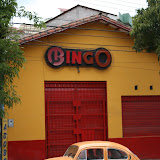
Was für ein Abenteuer! Freitag Nacht um 9 Uhr ging es los. Tony (Geology Professor) hat mich eingeladen mit seinen Touristen Studenten einen Ausflug zu machen. Mit 52 Leuten fuhren wir zu den Grutas de Warari, im Livitaca District, in der Provinz Yanaoca; ein Dorf mitten in den Anden auf ca 4000 Meter Höhe. Angeblich sollte die Busfahrt 8 Stunden dauern. Doch der Busfahrer hatte sich verfahren, und plötzlich ging nichts mehr. Mitten in der Nacht hat sich der Bus festgefahren, und alle Versuche weiter zu kommen sind gescheitert. Erst nach 4 Stunden Wartezeit, kam die Hilfe. Weiter 4 Stunden wurden benötigt, um endlich in Warari anzukommen. Nach einem Mittagessen im Restaurant (siehe Fotos), ging es Berg hoch zu der Höhle. Die Höhle verfügt über 5 Eingänge und 8 Ausgänge und wurde erst vor kurzem entdeckt. Die Touristen Studenten sollten einen Eindruck bekommen, ob dieser Ort über touristisches Potenzial verfügt. In der Höhe war absolut kein Licht. Nur die Taschenlampen und eine Benzinlampe dienten als Lichtquelle. Trotz der vielen Berge, kennt Tony nur insgesamt 2 solcher Höhlen im Departement von Cusco. Mir hat die Fahrt zur Tropfsteinhöhle sehr gut gefallen. Vorallem der Ausblick im Bus war gewaltig; überall nur Berge, Täler und Flüsse.
 |
| Grutas de Warari |
Donnerstag, 12. März 2009
Sunny City Tour
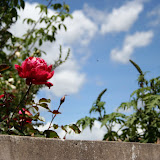
The sun is shining, the weather is sweet,... Einige Impressionen von Cusco bei Sonnenschein. Fortsetzung folgt.
 |
| Cusco City - Sunny City Tour |
Interim Report week 4 - 6
Interim Report weeks 4-6
1.the daily activities/ placement assignments
In week 4 I started to collect information that is useful for the destination analysis of Cusco. I consulted Violeta and she explained the many different Tourism companies to me, that are responsible for a proper development in Cusco. Some of the main bodies are DirCetur, PromPerú and INC (Instituto Nacional de Cultura). All these institutions have distinct roles within the tourism industry. Being represented on the internet, I could find a lot of information that is relevant for the analysis of Cusco. However, all the reports and data are in Spanish, and nothing is in English. Therefore, processing the information is very time consuming, since my Spanish skills are not that advanced. Nevertheless, I am able to understand most of the sentences by using a dictionary.
In week 5 I finished my Spanish classes with the professor. In order to keep on advancing, I study every day and repeat the notes of the class. Moreover, I spent hours translating from Spanish into English and catch up new vocabulary.
In week 6 I got tired translating all the reports, so that I tried to find another solution. I went to the State University San Antonio. It was very interesting to see the differences to NHTV. The facilities are less developed; i.e. no computer rooms and no library. Despite the excitement I did not find what I was looking for. Following the advice of some friends of the family, I went the next day to the library to have a look. Once again, I was surprised. It was not an open library where one can have a look at the different books. Instead, a woman could be asked to lend one book at the time. Obviously, all books were in Spanish. I spent some hours looking at the theses of the University of San Antonio. Unfortunately, it was not possible to make any copies. I was only able to take some pictures with my camera of the most useful data. Hence, I decided to face the challenge of translating everything from Spanish into English, since it seems to be the only possibility. Another friend of the family is going to organize a book of a professor about tourism in Cusco. With all these information I should be able to write the destination analysis.
2.attainment targets
I was still working on improving my Spanish skills. I have recognized now, how important it is to know the language because almost everything is in Spanish here. Moreover I tried to be creative to gather information on different levels. I understood, that research activities do not always turn out to be successful. Therefore, more time needs to be invested it obtaining the relevant data. The more time I spend here, the more insight I get into the Peruvian way of living. One day I visited a Quechua language school with Ingrid to get a better understanding of the culture. Quechua is the traditional language of the Incas, that is still spoken by people in rural areas of the Andean, but also here in Cusco. I wanted to have a look at the language and due to curiosity wanted to follow a few classes. However, no classes were available at a convenient time.
3.personal aspects
Although I am not really aware of it, I am working a lot on my weaknesses. By this week, I have completely adjusted myself to the life here. I do feel comfortable to still live under a roof with the family, although I was to receive an own room with private bathroom. I spend a lot of time with Ingrid, who helps me a lot with my Spanish, and other activities, such as shopping and getting to know the city. We became good friends and from time to time, she gives comments on my behaviour. She has notices several differences to the Peruvian culture. For example, Ingrid describes me as a cold person because sometimes I act very serious and I do not like if someone touches me. Moreover I am working on being more patient and helpful. Ingrid is studying English, so that we help each other to become better speakers. Although I find it very difficult to calmly explain unknown words, or make corrections of her sentences I am improving myself. Because I understand that she is in the same situation, when I try to speak Spanish. She does a much better job helping me and I try to learn from her.
After 6 weeks in Peru I find it easy to live here. I made improvements with the language and can understand the people. I can also express myself on a basic level. I accepted the fact, that many things are very different to Europe and managed to get along with it.
4.future action items
The following weeks I will be busy with reading and translating all the information that I collected in the last weeks. I hope I will make faster progress then in week two, so that I can finish the destination analysis sometime soon. Moreover, Violeta asked me to translate her website into German, when it will be completed. Here in Peru, you never know when this is going to be done. Moreover, I will continue to work on my Spanish skills by rewriting the notes of the Spanish classes. I am also planning to visit other cities on the weekend, i.e. Pisac, Urubamba and maybe Ollantaytambo. I am keen on discovering more of the Peruvian way of life outside Cusco.
1.the daily activities/ placement assignments
In week 4 I started to collect information that is useful for the destination analysis of Cusco. I consulted Violeta and she explained the many different Tourism companies to me, that are responsible for a proper development in Cusco. Some of the main bodies are DirCetur, PromPerú and INC (Instituto Nacional de Cultura). All these institutions have distinct roles within the tourism industry. Being represented on the internet, I could find a lot of information that is relevant for the analysis of Cusco. However, all the reports and data are in Spanish, and nothing is in English. Therefore, processing the information is very time consuming, since my Spanish skills are not that advanced. Nevertheless, I am able to understand most of the sentences by using a dictionary.
In week 5 I finished my Spanish classes with the professor. In order to keep on advancing, I study every day and repeat the notes of the class. Moreover, I spent hours translating from Spanish into English and catch up new vocabulary.
In week 6 I got tired translating all the reports, so that I tried to find another solution. I went to the State University San Antonio. It was very interesting to see the differences to NHTV. The facilities are less developed; i.e. no computer rooms and no library. Despite the excitement I did not find what I was looking for. Following the advice of some friends of the family, I went the next day to the library to have a look. Once again, I was surprised. It was not an open library where one can have a look at the different books. Instead, a woman could be asked to lend one book at the time. Obviously, all books were in Spanish. I spent some hours looking at the theses of the University of San Antonio. Unfortunately, it was not possible to make any copies. I was only able to take some pictures with my camera of the most useful data. Hence, I decided to face the challenge of translating everything from Spanish into English, since it seems to be the only possibility. Another friend of the family is going to organize a book of a professor about tourism in Cusco. With all these information I should be able to write the destination analysis.
2.attainment targets
I was still working on improving my Spanish skills. I have recognized now, how important it is to know the language because almost everything is in Spanish here. Moreover I tried to be creative to gather information on different levels. I understood, that research activities do not always turn out to be successful. Therefore, more time needs to be invested it obtaining the relevant data. The more time I spend here, the more insight I get into the Peruvian way of living. One day I visited a Quechua language school with Ingrid to get a better understanding of the culture. Quechua is the traditional language of the Incas, that is still spoken by people in rural areas of the Andean, but also here in Cusco. I wanted to have a look at the language and due to curiosity wanted to follow a few classes. However, no classes were available at a convenient time.
3.personal aspects
Although I am not really aware of it, I am working a lot on my weaknesses. By this week, I have completely adjusted myself to the life here. I do feel comfortable to still live under a roof with the family, although I was to receive an own room with private bathroom. I spend a lot of time with Ingrid, who helps me a lot with my Spanish, and other activities, such as shopping and getting to know the city. We became good friends and from time to time, she gives comments on my behaviour. She has notices several differences to the Peruvian culture. For example, Ingrid describes me as a cold person because sometimes I act very serious and I do not like if someone touches me. Moreover I am working on being more patient and helpful. Ingrid is studying English, so that we help each other to become better speakers. Although I find it very difficult to calmly explain unknown words, or make corrections of her sentences I am improving myself. Because I understand that she is in the same situation, when I try to speak Spanish. She does a much better job helping me and I try to learn from her.
After 6 weeks in Peru I find it easy to live here. I made improvements with the language and can understand the people. I can also express myself on a basic level. I accepted the fact, that many things are very different to Europe and managed to get along with it.
4.future action items
The following weeks I will be busy with reading and translating all the information that I collected in the last weeks. I hope I will make faster progress then in week two, so that I can finish the destination analysis sometime soon. Moreover, Violeta asked me to translate her website into German, when it will be completed. Here in Peru, you never know when this is going to be done. Moreover, I will continue to work on my Spanish skills by rewriting the notes of the Spanish classes. I am also planning to visit other cities on the weekend, i.e. Pisac, Urubamba and maybe Ollantaytambo. I am keen on discovering more of the Peruvian way of life outside Cusco.
Montag, 9. März 2009
Karneval für Rentner und Jubiläum der Universität San Antonio
Rentner in Peru sind sehr fit! Den Spass an Karneval lassen sie sich nicht nehmen und tanzen in traditionellen Kostümen durch die Straßen.
Die staatliche Universität von Cusco feiert und mit ihr eine gewaltige Anzahl an Studenten. Verschiedene Themen wurden präsentiert und alle Studenten sind fein rausgeputzt.
 |
| Karneval für Rentner |
Die staatliche Universität von Cusco feiert und mit ihr eine gewaltige Anzahl an Studenten. Verschiedene Themen wurden präsentiert und alle Studenten sind fein rausgeputzt.
 |
| Jubiläum der Universität San Antonio |
Donnerstag, 5. März 2009
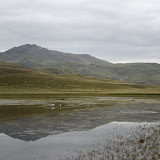
Picol Mountain
Hier sind weitere Fotos vom heutigen Tag. Um meine Langeweile zu vertreiben, bin ich spazieren gegangen und habe Fotos von der Lanschaft gemacht. Leider war es die ganze Zeit bewölkt. Warte nun auf einen schönen sonnigen Tag, an dem sich die tatsächliche Schönheit von Cusco demonstrieren lässt. Weiter Fotos werden in kürze folgen.
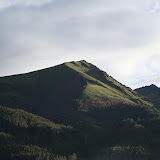 |
| Picol Mountain - Zweite Foto Tour |
Dienstag, 3. März 2009
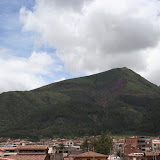
Die Kamera ist DA!


Gestern war es endlich soweit. Ich bin zur SurPost gegangen, und habe dort die Canon 350 D aus Thailand abgeholt. Martin sei Dank (www.eyesurprise.com)Hier sind die ersten Testfotos. So sieht es aus, wenn ich aus meinem Fenster gucke ;)
Abonnieren
Posts (Atom)