|
| cusco art |
Freitag, 24. April 2009

Alpaca Kleidung

Hier sind ein paar Fotos von Alpaca Kleidung, 100% Naturalpaca.
Diese Wolle wärmt mehr als Baumwolle, oder Schaafswolle. Peru verfügt
über die beste Qualität von Alpaca Wolle!
 |
| alpaca kleidung |
Bei Interesse schreibt ne e-mail an hannert@web.de
Maras y Moray
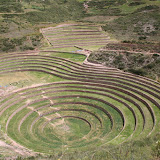 |
| Marays und Moray |
Maras
Maras ist eine koloniale Bevölkerung und liegt etwa 48 km nördlich von Cusco. Maras war ebenfalls der Name einer indigenen Volksgruppe. Wir gehen davon aus, dass die Inka eine große und extensive Landbewirtschaftung dort praktizierten. Maras erreichte seinen Höhepunkt in dem 16 bis 18 Jahrhundert, vor allem auf Grund der nah gelegenen Salzminen. Der Handel und Transport von Salz hatte einen großen Einfluss in dieser Region. Die Überreste, wie zum Beispiel die vielen fein verarbeiteten Granit Türen und Fassaden, ermöglichen einen Einblick in diese großartige Zeit.
Moray
Moray ist die einzige archäologische Stätte in der Region und liegt 53 km von Cusco entfernt. Sie verfügt über vier große Gruben. Diese natürlichen Vertiefungen sind das Ergebnis von Wassererosion auf dem festen Plateau von Maras, die einen hohen Anteil an Kalziumkarbonat aufweisen. Der größte dieser Brunnen wird Hatun Muyu (große Kreise) genannt und verfügt über eine Tiefe von 150 m mit einem Umfang von 150 m. Die Bevölkerung dieser Region konstruierte kreisförmige Terrassen, die für Experimente in der Landbewirtschaftung genutzt wurden.
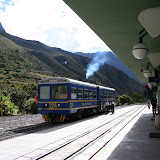
Heiliges Tal der Inka
 |
| sacred valley |
Beschreibung der Tour
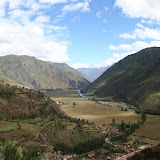
Diese Tour durch das heilige Tal der Inka (Valle Sagrado) ermöglicht es wunderschöne Landschaften zu bestaunen, wie zum Beispiel das charakteristische Urubamba Tal mit Bauten aus dem 16. Jahrhundert und Einheimischen, die ihre Traditionen und Sitten nach wie vor pflegen.
Wir Besuchen eine Reihe von archäologischen Städten von großer Bedeutung. Das erste Ziel ist:
Pisaq. Diese alte und schöne koloniale Stadt befindet sich am linken Ufer des Urubamba Flusses auf einer Höhe von 2972 Metern, und ist das Zentrum der Keramikproduktion und der Landwirtschaft. An jedem Dienstag, Donnerstag und Sonntag findet eine Ausstellung von Kunsthandwerk und landwirtschaftlichen Produkten statt. Es werden Waren getauscht und verkauft. Tausend Meter über der Stadt Pisaq befinden sich beeindruckende Überreste der prähistorischen Stadt Pisaq.
Diese Ruinen zeichnen sich durch riesigen Anden Terrassen aus, die noch heute von den nativen Gemeinschaften bewirtschaftet werden. Die erstaunliche Arbeit mit dem Stein kann an Palästen, Kirchen, kleinen Plätzen und dem großen Friedhof mit Hunderten von Nischen begutachtet werden.
Anschließend besuchen wir die traditionellen Dörfer von Coya, Lamay, und Calca Yucay, der Ort an dem sich der Inka Sairy Tupac Palast befindet. Am Ende fahren wir wieder nach Urubamba und genießen dort die typische und internationale Küche.
Ollantaytambo ist ein einzigartiges lebendes Museum, da die Einwohner noch in Gebäuden der Inka, die vor Jahrhunderten erbaut wurden, leben. Des weiteren sind ursprüngliche Straßen und Wände intakt. Ollantaytambo liegt auf einer Höhe von 2792 Meter über dem Meeresspiegel. Der Fluss Patacancha teilt die Bevölkerung in zwei Teile. Die erste Zone ist das Wohngebiet. Wenn man den Fluss überquert findet man den zweiten Teil mit einer Festung in den Bergen. Diese Festung ist eine der besten und feinsten Steinbauten der Welt und besteht aus sechs Monolithen aus dem Diorit Gestein. Die Steine sind so gut verarbeitet, dass selbst eine Nadel nicht eindringen kann.
An diesem Ort fand auch ein Kampf zwischen den Inkas und Spaniern statt.
Nachdem Besuch der unvergesslichen Stadt setzen wir die Tour fort und besuchen eine antike und wunderschöne Bevölkerung.
Chinchero. Dieser wichtiger Ort war die Heimat des Inka Sinchi Roca. Die Bevölkerung in diesem Gebiet war in 10 Dorfgemeinschaften aufgeteilt und stellte die soziale Grundlage der Inkas in der Zeit dar. Chinchero liegt auf einer Höhe von 3762 Meter über dem Meeresspiegel und verfügt über Gebäude aus der Inka und Kolonialzeit, mit schönen Terrassensystemen und einer attraktiven Kirche, die über einem Inka Tempel steht.
Zweifellos der wichtigste Ausblick sind die schneebedeckten Gipfel, die heiligen Apus die auch als Schutzgötter der indigenen Bevölkerung bezeichnet werden. Im Nordwesten befindet sich der Chicon (5750 m), Veronica oder Wakay Willk (6000m, Sawasiray (5900m); Colquecruz (6000m) und der Gran Salkantay (6300m). Des weiteren hat man einen spektakulären Blick über zwei Seen.
City Tour - Cusco
 |
| city tour |
Diese Tour ermöglicht es die folgenden Sehenswürdigkeiten zu bestaunen:
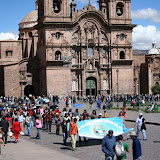
Die Kathedrale. Diese befindet sich im Nordosten des Plaza de Armas und wurde in dem fünfzehnten Jahrhundert erbaut. Nach dem verheerenden Erdbeben von 1650, das den größten Teil der Stadt zerstörte, wurde die Kathedrale restauriert.
Sie entspricht der Form eines lateinischen Kreuzes und ist auf den Grundmauern des Sunturwasi Palast platziert, der den Inka Wiracocha gehörte. Viele andere Bauten stehen ebenfalls auf ursprünglichen Inka Gebäuden. Die Fassade entspricht der Baukunst des Barock und unzählige fein geschnitzte Skulpturen aus Holz schmücken das Erscheinungsbild. Die Kathedrale ist ein lebendiges Museum mit rund 400 kolonialen Gemälden und einem massivem Silberaltar.
Nach dem Besuch der Kathedrale folgt die Besichtigung des Qoricancha, das übersetzt aus dem Quechua „in der Nähe von Gold“ lautet. Das Qoricancha war ein großer Tempel der Sonne mit Wänden, die aus purem Gold bedeckt waren. Es war der Haupt-Schrein in der Anbetung des Sonnen Gottes und des Inkareiches.
Die Kirche von Santo Domingo wurde auf den Grundmauern der Qoricancha erbaut und die ursprünglichen kreisförmigen Mauern sind sind deutlich sichtbar.
Anschließend werden Monumente außerhalb des Stadtzentrums besucht:
Die Festung Sacsayhuaman. Das Wort stammt aus dem Quechua und bedeutet Falke oder marmorierter Kopf und war von religiöser und militärischer Wichtigkeit. Dieser Tempel war der Sonne gewidmet. Jedes Jahr am 24 Juni wird das berühmte Fest Inti Raimy zur Anbetung des Sonnengottes zelebriert. Der zyklopische Bau ist sehr beeindruckend aufgrund der Größe der Steine, die zwischen 90 und 125 Tonnen wiegen.
Nur einen Kilometer entfernt ist die nächste Attraktion:
Das Amphitheater Q'ENQO. Das Wort aus dem Quechua bedeutet Labyrinth und war ein heiliger Ort, sowie viele andere Bauten in der Umgebung. Ein großer erosionierter Kalkstein mit zahlreichen Verwachsungen, die Tierformen, Nischen und Wasserstraßen an der Oberfläche ähneln. Die wichtigste Erscheinung ist ein zickzack-artiger Kanal, der aussieht wie eine Schlange und wahrscheinlich durch fließendes Wasser erschaffen wurde.
Der Kalkstein im inneren Bereich ist durch miteinander verbundenen Korridoren und Passagen natürlichen Ursprungs geprägt. In unmittelbarer Nähe befindet sich ein halb runder Stein mit Nischen, der als Amphitheater bekannt ist.
3 Kilometer weiter oben erreichen wir die nächste interessante Sehenswürdigkeit
Pucapucara, das bekannt ist als Rote Festung (Puca bedeutet „Rot“ und Pucara „Festung“ in Quechua). Trotz dieses Namens diente Pucapucara nicht als Festung, sondern wahrscheinlich als Ort der Erholung und Unterkunft vor der Ankunft in Cusco. Dieser Komplex wurde aus rotem Andesit erbaut und beinhaltet viele Universitäten, Aquädukte, Plätze und Straßen.
Einige Kilometer weiter befindet sich der letzte Ort unserer Besichtigung.
Tambomachay, ein Heiligtum für die Verehrung des Wassers, das religiöse Funktionen hatte. Tambomachay ist ein gutes Beispiel für die feine architektonische Baukunst des Menschen.
Interim report week 10 – 12

1.the daily activities/ placement assignments
Week 10 had only three working days and the office was closed on Thursday and Friday because of Easter. I spent my time on the destination analysis and about half of it is done.
Although I planned to continue working on the destination analysis until it is finished, I had to change my plans and started translating the new website (www.goldenempiretours.com) into German. I was busy with it on Monday and Tuesday and I estimate that I will need several weeks to translate all the explanations of the tours. Surprisingly, I began with my three tours that I received from Violeta. On Wednesday the City tour started from 1 until 7 and I visited places such as Sacsahuaman, Q'ENQO and Tambomachay. Luckily, the guide was very interesting and I received lots of information in Spanish. Unfortunately I could not visit the cathedral that day due to a demonstration of tourism professionals. They protested against the government that is planning to change the law to allow everyone to become a tour guide. In their protest they surrounded the Cathedral and blocked the entrance. Thus, I will have to visit it another day. In general, the whole tour was very interesting and informative. The only fact that I disliked was the lack of time at every attraction.
Thursday in the morning I went to see the Tour Sacred Valley. It was very amazing and I extremely enjoyed Pisac and the market, as well as the ruins of Ollantaytambo. I had the same tour guide as the day before. The travel from one place to another was very comfortable in a new bus. There were no problems and everything went very smoothly. I was impressed by the good coordination of the tour and visited many places in only one day, including time for lunch. People from different travel agencies were merged in this one bus, eating in 5 different restaurants, and staying in different hotels. The bus picked everyone up and dropped everyone off at their restaurant. I learned a lot of the ancient Inca culture, as well as some historical backgrounds during the invasion of the Spanish. Ollantaytambo is considered as the second most famous attraction after Machupicchu and is located in the Sacred valley, which is a long valley in between enormous mountains. The valley begins with Pisac, then Urubamba and ends with Ollantaytambo. It is characterised by the most fertile land in this region, which allows the cultivation of the biggest and most qualitative maize. Potatoes, maize and coca are the most important plants in the Inca culture. Pre Inca culture constructed many terraces and some other temples, which were improved by the Inca. Despite our modern technology there is no explanation for the architecture of the ruins, for example how they cut the rocks so precisely and how they constructed the huge stones in perfect alignment. The guide mentioned some theories, but added that none of them is 100% reliable. Hence, the Inca culture was very advanced with knowledge of astronomy, e.g. equinoxes were made visible at Ollantaytambo. Although there is no evidence nowadays, the Inca had to know mathematics to construct the buildings, e.g. the knowledge about pi (3,16) which is in accordance with the inclination of the walls to make them more resistant of earthquakes. Moreover they believed in Incarnation and a next life, so that the high class was mummified and buried with their belongings. The Inca empire had an distinct infrastructure, that allowed to eat fresh fish in only two days in Cusco. The distance from the sea covers a length of over 600 km. Llamas were used for transportation. These animals are very smart and only walk 30km a day, no meter more and carry maximal 25 kilos. If the limit is excessed, it refused to walk. Many cities therefore have a distance of 30 km, e.g. Cusco-Pisac. The mail system was very fast as well. The entire region was made up of distinct communities with over 70 languages. The Inca empire organised everything and nowadays only 2 languages remain, i.e. Quechau and Antaina. Plants that are native in Peru are potatoes and Tomatoes and maize. More varieties of potatoes (over 350) and maize (over 40) than in Peru are not to be found in any other country.
On Friday I went by bus to Ollantaytambo to take the train Vistadome to Aguas Calientes (Machupicchu). The Machupicchu tour was very interesting and one of the most amazing things I have seen in Peru so far. Aguas Calientes is a pure tourism place, covered with restaurants and hotels of all types and tourists from all countries. I accompanied two clients from Golden Empire Tours all Saturday and after the guided tour we climbed Waynapichu for 3 hours.
In week 12 I continued traducing the website. In addition, I visited almost all missing places of my Tourism Ticket, i.e. Maray and Moray, two art museums, one native dance performance, and the historical Museum of Cusco. The Tourism Ticket is only valid for 10 days, so that all the attractions need to be visited during that period and are completely free. On Thursday I was done with the tours and sightseeing of attractions and continued translating the website.
2.attainment targets
The past three weeks I have been intensively working on learning more about the ancient Inca culture. Not only did I get an insight of their cultural heritage, I also got to know about their ancient way of life. I visited the major attractions of the city Cusco, which were included in the city tour. The tour of the Sacred Valley allowed me to visit the city of Pisaq, Urubamba, Ollantaytambo, and Maras. I have seen how the alpaca wool is processed and coloured with natural ingredients. I visited places that demonstrated the influence of the colonial epoch with typical paintings and churches, e.g. Chinchero. I experienced first hand what travelling in Peru is like and got to know more about the tourism product.
3.personal aspects
Travelling in the department of Cusco is very easy and comfortable. Apart from the organised bus tours, I had to go to Ollantaytambo and then to Aguas Calientes by myself. I did not encounter any negative circumstances. I perceived all the tours to be very safe and it was a great pleasure. One weakness of me that has been challenged during the past few weeks was adapting myself to changing plans. It was a small surprise when Violeta told me that I was going to do all the tours in the previous weeks. I had to stop my work with the destination analysis due to the tours and the translation of the website. However, I was able to adapt myself very quickly to the new situation.
4.future action items
For the weeks to come I am planning to finish translating the website. I will have to look how much progress I will make and if there is going to be time to work on other things. I still have the destination analysis in my mind, and would like to finish it as soon as possible. However, I do not have all the information about tourism organisations and planning, so that I would need to make an interview with DIRCETUR. If there is going to be some free time, I would like to continue studying my Spanish. I still need to finish rewriting all the notes.
Mittwoch, 1. April 2009
Interim Report week 7 - 9
1.the daily activities/ placement assignments
In week 7 I continued working on the destination analysis. Translating the reports got easier, so that I can make faster progress. I was busy with with the market part. Moreover I discussed with Violeta a design for an advertisement board, that will be placed above the entrance of the office. Friday was a very interesting day, because Violeta and I visited a tourism fair in Cusco. Tour operators, native communities, hotels, and restaurants represented themselves and provided a lot of information about tourism in Puno and the Lake Titicaca. It was the first workshop of its kind in Cusco and I was very fascinated. Not only did I get an insight in Community based tourism, which is the most important tourism type in that area, I also got to taste the traditional food from that area; lots of fish, 5 different types of potatoes and Seviche. I collected many brochures, maps and several Cds with valuable information. It was a very helpful experience to get to understand the reasons for vacations in the Titicaca area. The organizers of that tourism fair promised a 2 days- gratis tour for all participating travel agencies to experience first hand the richness of the communities.
In week 8 and 9 I was mainly working on the destination analysis. I finished translating the market part, so that I had enough information to complete that point in the destination analysis. Then, I started to work on the Tourism supply for Cusco. Although I made some progress, there is still a lot of work left for the analysis. Having been busy with this all the time, I did not have time yet to start the other NHTV assignments.
I have noticed that writing the destination analysis requires a lot of work. However, I feel more secure to write it, since it is the second time I have to write one. The destination analysis of Danang West Bay serves as an example, so that I exactly know what information is needed and how it should be put into a text.
2.attainment targets
I am still keen on improving my Spanish skills. In week 8 I received an e-mail from Daniela Espinosa, who is the editorial journalist of the online magazine Veinte Mundos (http://www.veintemundos.com/). Somehow she knew about my placement in Cusco, and asked me whether or not I would like to write an article for her magazine, in Spanish. I immediately agreed and used this opportunity to improve my written Spanish. Violeta was so kind to correct the mistakes, so that after three days I was able to hand in my article with some pictures. It will be published some time soon. Moreover, I mentioned the companies website, so that the article will be a kind of promotion of the company.
The friday of week 7 I enjoyed visiting a tourism fair in Cusco. I got to talk to native inhabitants of the lake Titicaca, who are involved in tourism activities. They are providing accommodation for foreign tourists, and offer at the same time different activities such as planting plants, harvesting potatoes, and learning about the customs and traditions while interacting with the family. I saw many pictures of former tourists and immediately got interested in visiting the place. One manager explained, that the lake Titicaca is the place where the Inca are descended from. Finally, I collected various business cards from tour operators and hotels, that are active in that area.
3.personal aspects
One particular weakness that I have been working on is to be persistent. I have been working weeks on the destination analysis and still did not manage to finish it. I know recognize the big advantage of working in a group; it takes much less time to finish such a project. On the other side I enjoy the experience of writing it alone, because it gives me a foretaste of the thesis. I understand now how much work it is going to be and that such a project requires proper preparation. Hence, the only solution is to stay persistent and continue working on the analysis. I have also recognized that it is important to balance one's life. Although it might be difficult to work hard during all the week, there are still the weekends that pay off the effort. The harder I work during the week, the greater is the reward during the weekends. Thus, I am more pleased with myself and am able to keep up my motivation. Moreover I started to use the weekends to travel to nearby cities. I feel secure enough with my Spanish to discover other places. Two weeks ago I visited Urubamba, which is about 1 hour and a half by bus from Cusco. I went to a party there and at an instance got to know other people. One couple, the man from France and the girl from Poland, both living now in Norway, told me about their travel experiences in Argentina, Chile, and Uruguay. They mentioned the differences of the other countries compared to Peru. Moreover I got to know someone from Peru, Alan, who was born in Urubamba. He invited me to visit him during another weekend in order to do some hiking, visit an institution that helps children and that is run by Germans, and to go mountain biking.
4.future action items
During the next weeks I will continue with my analysis. In addition to that, I will start translating the website of the company, which is almost ready now. If there is more time, I would like to start with the NHTV assignments, that need to be done for the placement report. When the new prices of Golden Empire Tours are ready, I will do promotional work and send e-mails to foreign travel agencies. I also will continue to improve my Spanish.
In week 7 I continued working on the destination analysis. Translating the reports got easier, so that I can make faster progress. I was busy with with the market part. Moreover I discussed with Violeta a design for an advertisement board, that will be placed above the entrance of the office. Friday was a very interesting day, because Violeta and I visited a tourism fair in Cusco. Tour operators, native communities, hotels, and restaurants represented themselves and provided a lot of information about tourism in Puno and the Lake Titicaca. It was the first workshop of its kind in Cusco and I was very fascinated. Not only did I get an insight in Community based tourism, which is the most important tourism type in that area, I also got to taste the traditional food from that area; lots of fish, 5 different types of potatoes and Seviche. I collected many brochures, maps and several Cds with valuable information. It was a very helpful experience to get to understand the reasons for vacations in the Titicaca area. The organizers of that tourism fair promised a 2 days- gratis tour for all participating travel agencies to experience first hand the richness of the communities.
In week 8 and 9 I was mainly working on the destination analysis. I finished translating the market part, so that I had enough information to complete that point in the destination analysis. Then, I started to work on the Tourism supply for Cusco. Although I made some progress, there is still a lot of work left for the analysis. Having been busy with this all the time, I did not have time yet to start the other NHTV assignments.
I have noticed that writing the destination analysis requires a lot of work. However, I feel more secure to write it, since it is the second time I have to write one. The destination analysis of Danang West Bay serves as an example, so that I exactly know what information is needed and how it should be put into a text.
2.attainment targets
I am still keen on improving my Spanish skills. In week 8 I received an e-mail from Daniela Espinosa, who is the editorial journalist of the online magazine Veinte Mundos (http://www.veintemundos.com/). Somehow she knew about my placement in Cusco, and asked me whether or not I would like to write an article for her magazine, in Spanish. I immediately agreed and used this opportunity to improve my written Spanish. Violeta was so kind to correct the mistakes, so that after three days I was able to hand in my article with some pictures. It will be published some time soon. Moreover, I mentioned the companies website, so that the article will be a kind of promotion of the company.
The friday of week 7 I enjoyed visiting a tourism fair in Cusco. I got to talk to native inhabitants of the lake Titicaca, who are involved in tourism activities. They are providing accommodation for foreign tourists, and offer at the same time different activities such as planting plants, harvesting potatoes, and learning about the customs and traditions while interacting with the family. I saw many pictures of former tourists and immediately got interested in visiting the place. One manager explained, that the lake Titicaca is the place where the Inca are descended from. Finally, I collected various business cards from tour operators and hotels, that are active in that area.
3.personal aspects
One particular weakness that I have been working on is to be persistent. I have been working weeks on the destination analysis and still did not manage to finish it. I know recognize the big advantage of working in a group; it takes much less time to finish such a project. On the other side I enjoy the experience of writing it alone, because it gives me a foretaste of the thesis. I understand now how much work it is going to be and that such a project requires proper preparation. Hence, the only solution is to stay persistent and continue working on the analysis. I have also recognized that it is important to balance one's life. Although it might be difficult to work hard during all the week, there are still the weekends that pay off the effort. The harder I work during the week, the greater is the reward during the weekends. Thus, I am more pleased with myself and am able to keep up my motivation. Moreover I started to use the weekends to travel to nearby cities. I feel secure enough with my Spanish to discover other places. Two weeks ago I visited Urubamba, which is about 1 hour and a half by bus from Cusco. I went to a party there and at an instance got to know other people. One couple, the man from France and the girl from Poland, both living now in Norway, told me about their travel experiences in Argentina, Chile, and Uruguay. They mentioned the differences of the other countries compared to Peru. Moreover I got to know someone from Peru, Alan, who was born in Urubamba. He invited me to visit him during another weekend in order to do some hiking, visit an institution that helps children and that is run by Germans, and to go mountain biking.
4.future action items
During the next weeks I will continue with my analysis. In addition to that, I will start translating the website of the company, which is almost ready now. If there is more time, I would like to start with the NHTV assignments, that need to be done for the placement report. When the new prices of Golden Empire Tours are ready, I will do promotional work and send e-mails to foreign travel agencies. I also will continue to improve my Spanish.
Abonnieren
Posts (Atom)